Social Media Marketing in Ireland: A Practical Guide for Irish Businesses
Social media marketing in Ireland made practical: which platforms matter, organic vs paid, posting cadence and the metrics that win real leads. Get in touch.
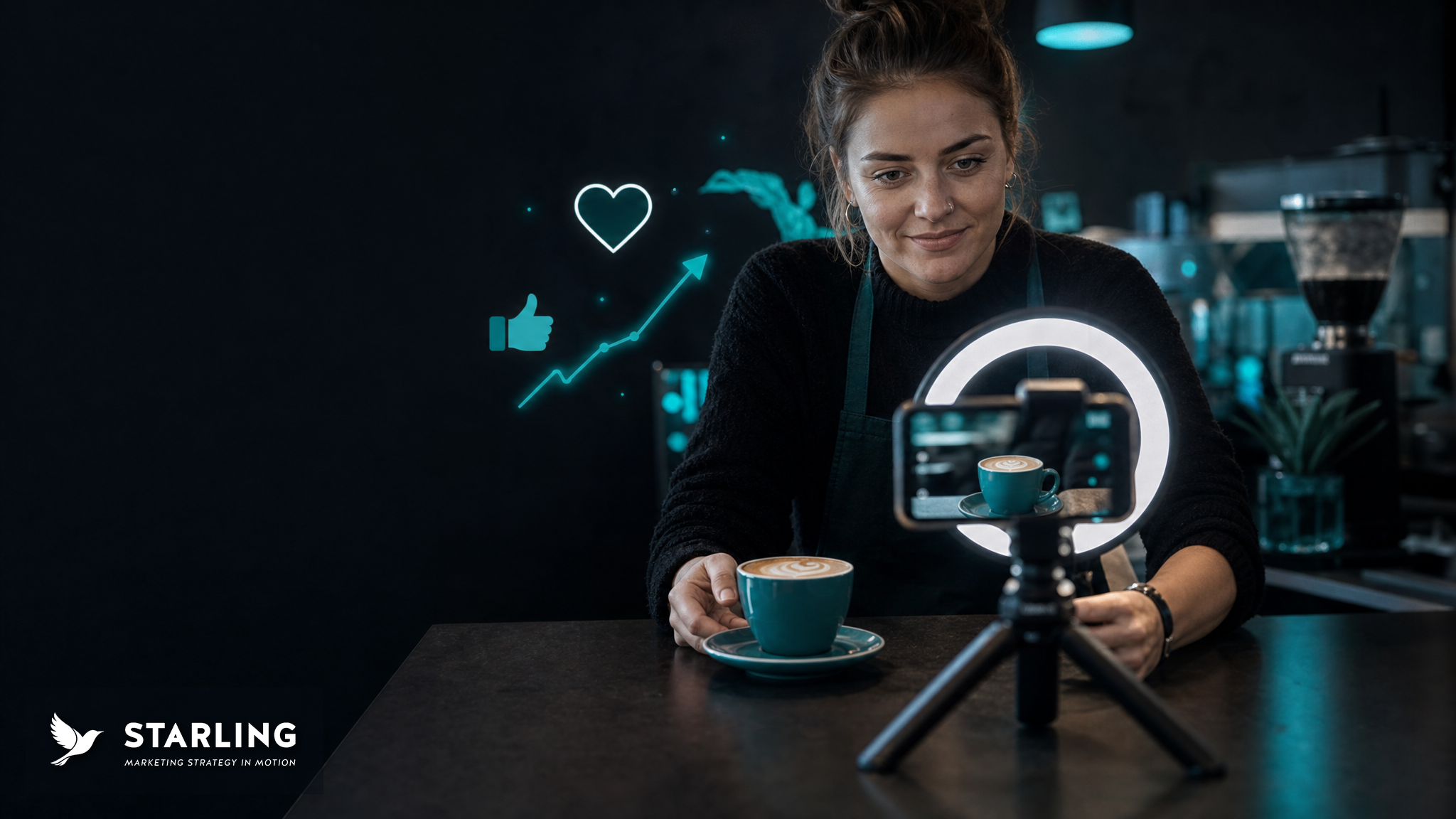
Three in four internet users in Ireland are on social media. Your customers are in there right now, thumbing past a hundred posts between the school run and a flat white, and they have already made up their mind about businesses like yours before they ever pick up the phone. So the question of social media marketing in Ireland was never whether to be on it. It is whether your presence is pulling its weight, or just sitting there like a shop with the lights off.
Most social media advice is written for American brands with American budgets. Post daily. Chase the follower count. Treat every platform the same. That advice burns Irish SME owners who have no content team, no need for millions of impressions, and one real goal: the phone ringing with the right kind of enquiry.
This guide to social media for business in Ireland is for the owner, not the marketer. Here is what it covers:
- Which platforms actually matter for Irish SMEs, and which you can ignore
- What the real Irish usage numbers say about where your customers are
- Organic versus paid, and why "free" reach is mostly gone
- How often to post without burning out
- What drives leads versus what just looks busy
- Local and Irish content angles that travel
- The common mistakes that waste months of effort
Where Irish Customers Actually Are
Start with the data, because guessing is expensive and the bill always arrives later.
In 2025, 75% of internet users in Ireland used social networking platforms such as Facebook, Instagram, and WhatsApp, up from 73% the year before, according to the Central Statistics Office. Across the whole population, there were 4.26 million social media user identities in October 2025, roughly 80% of everyone in the country, per DataReportal. That is not a niche channel. That is the country.
The headline number hides a shift worth understanding, though. Social media use among 16 to 29 year olds is still high at 88%, but it dropped seven percentage points in a single year, down from 95% in 2024, the CSO found. Young people have not left the internet. They have slipped into private messaging, smaller groups, and the corners where nobody is selling to them. There is also a clear gender split in that age group: 93% of young women use social networking, against 81% of young men.
Here is the part that matters for your business. The people most likely to scroll straight past a polished brand post are the very ones who used to be the easiest to reach. Attention is no longer handed out for free. You earn it with something people actually want, or you pay for it.
Which Platforms Matter for an Irish SME
You do not need to be everywhere. You need to be where your specific customers are, doing something worth a second of their attention. Here is the honest breakdown for Irish businesses, including the trap most owners fall into on each one.
Facebook. The classic mistake is to pour everything into the business page and forget the groups exist. The page reaches almost nobody for free. The town and county Facebook Groups, meanwhile, are some of the busiest local marketplaces in the country, the digital version of the parish noticeboard. Facebook still has the broadest reach in Ireland, especially for customers aged 30 and up, so if you serve local consumers, trades, hospitality, retail or services, this is usually where the volume lives.
Instagram. Owners treat it as a gallery of pretty product shots, then wonder why nobody buys. It is a shopfront, not a portfolio. It works for anything visual: food, interiors, beauty, retail, property, events. The audience skews younger than Facebook but overlaps heavily. If your product or service photographs well, this is the window people press their nose against before they ever walk in.
LinkedIn. Most Irish SMEs picture it as the place you only visit when you are looking for a new job, so they leave it alone. If you sell to other businesses, professional services, B2B products, consultancy or recruitment, that is a gift to your competitors. It is where the decision-makers actually are, and where one well-written post can land in front of the exact people who sign the cheques. Thanks to the multinational presence here, Ireland has a dense professional network on it, which makes LinkedIn marketing in Ireland one of the most undervalued plays an owner can make.
TikTok. Plenty of Irish owners still file it under teenagers dancing in their bedrooms. By late 2025 its ads reached 62.6% of Irish adults, more than six in ten, per DataReportal's Digital 2026 report. That is not a youth club, that is the high street. It rewards personality and usefulness over a glossy production budget, which suits owner-led small businesses perfectly. If you can talk to a camera and show how something works, the door is wide open. If the thought makes you wince, nobody is forcing you through it.
WhatsApp. Owners forget it counts as marketing at all, mostly because it is already where they run half the business. It is the default way Irish people message, so it is also where a fair share of enquiries land. A salon confirming a booking, a butcher taking the Christmas turkey orders, a tradesman firing over a quote with photos: WhatsApp Business (catalogue, quick replies, broadcast lists) handles the lot and keeps your regulars one tap away.
The rule is short: pick one or two platforms you can do properly instead of five you do badly. Four neglected accounts tell people you have taken your eye off the ball. Two live ones tell them the opposite.
Organic Versus Paid: The Honest Version
Most agencies are slow to say this part out loud, because it sounds like bad news. Free reach on the big platforms has been shrinking for years.
So here is the blunt version. Post to your Facebook page today and only a sliver of your own followers will ever clap eyes on it. Average organic reach for a business page post now sits in the low single digits as a share of followers, roughly 1 to 2 percent, a shadow of what it was a decade ago. The platforms now feed people posts from friends and family first and keep the wide distribution for anything with budget behind it. The people who deliberately chose to follow you mostly will not see what you post unless you pay to put it in front of them, or someone passes it on.
None of that makes organic pointless. It just changes the job organic is there to do.
What organic social is for:
- Proof. Someone hears your name, checks your profile, and finds recent, real activity. That quiet trust signal closes business you will never spot in any analytics dashboard.
- Relationships. Replying to comments, answering DMs, turning up in the local groups. It builds slowly and out of sight, then pays off all at once when someone is ready to buy.
- Content that earns its own reach. The post that gets shared, saved, or sent to a mate skips the algorithm tax entirely. That is the only "free" reach left worth chasing.
What paid social is for:
- Reaching people who do not follow you yet.
- Targeting by location, age, interest, and behaviour, which counts for a lot in a market as geographically tight as Ireland, where the next county is often the next street.
- Predictable, measurable lead flow once you have an offer worth running.
For most Irish SMEs the right mix is plain: organic for trust and relationships, paid for reach and leads. If you are deciding where a tight budget goes first, a small, well-targeted paid spend usually beats more hours spent posting into the void and waiting for an echo. When you are ready to run paid campaigns properly, our social media management service covers both sides, and for search-intent paid traffic our Google Ads management tends to complement social rather than compete with it.
How Often Should You Post?
This is the first question nearly everyone asks, and it is the wrong one.
Cadence matters far less than consistency and quality. Three strong posts a month that say something worth reading will beat daily filler nobody touches, and they will not have you burnt out by week three. The platforms reward content that holds attention, not content that simply turns up on time.
A realistic, sustainable rhythm for a busy owner looks like this:
- Two to four posts a week on your main platform. Enough to look alive, few enough to keep the quality up.
- One genuinely useful or interesting post a week that you would happily let a stranger judge your whole business on. That is the one that earns shares.
- Daily presence in replies and DMs, even on days you post nothing. Responsiveness is a ranking signal on most platforms and a trust signal to every single person who messages you.
If you cannot hold a pace, ease off rather than vanishing for a month and crawling back with an apology post. Nothing whispers "this business might be gone" quite like a profile that went silent in spring and surfaced again at Christmas.
Leads Versus Vanity Metrics
Plenty of Irish businesses have a viral video and an empty order book. That is the whole problem in one line. This is where most social media effort goes to die: people measure the wrong thing, feel busy doing it, and cannot work out why nothing turns into money.
Vanity metrics feel great and tell you almost nothing about whether the work is paying off:
- Follower count
- Likes
- Impressions and reach on their own
- Going "viral" with content that has nothing to do with what you actually sell
A post can reach 50,000 people and bring in zero enquiries if not one of those people is your customer. A full room is no use if nobody came to buy.
Metrics that actually map to money:
- Profile visits and link clicks. People moving from the feed toward your website or contact details.
- Saves and shares. Stronger intent signals than likes. A save often means "I want this later."
- DMs and comment enquiries. Real humans asking a real question.
- Website traffic from social, tracked properly so you can see what converts.
- Enquiries and bookings you can trace back to a post or campaign.
The discipline is easy to say and hard to hold: every piece of content should have a job. Build awareness, prove credibility, or drive an action. A post that does none of those is decoration. And once a lead does arrive, the next job is not dropping it. A quick reply matters, but so does everything that happens after. Capturing enquiries and following up without fail is where most small businesses leak money, which is why pairing social with marketing and sales automation turns scattered DMs into a system, and a simple email marketing follow-up keeps the people who were interested but not yet ready.
Content That Works for Irish Audiences
Irish customers can smell generic from the far end of the street. Content that feels local, specific, and human will beat polished content that could belong to any business in any country, every time.
Be Visibly, Specifically Irish
Name the place. The town, the county, the local landmark, the GAA final weekend, the Bank Holiday rush. A café in Galway posting about the Saturday market crowd will run rings around the same café posting a stock photo of a flat white and a caption that could have come from anywhere. Specific is what builds the trust.
Use Irish English the way you actually talk. "Grand", "sorted", "give us a shout". Not forced, just yours. It reads as a real person rather than a marketing department, and it quietly tells the reader you are one of their own.
Show the Work and the People
The most reliable content type for an owner-led Irish business is the behind-the-scenes look at real work. The actual job, the actual team, the actual finished result. People buy from people, and a small business has one advantage the chains can never copy: you can show the human actually doing the thing.
- The trades business filming a before-and-after.
- The shop owner explaining why they stock what they stock.
- The consultant answering the question every client asks in the first meeting.
It costs next to nothing to make, a faceless competitor cannot fake it, and it quietly does the trust work that closes the sale.
Answer Real Questions
Every business has a mental list of the questions customers ask before they buy. Price ranges, how long it takes, what is included, what to expect on the day. Each one is a post. Each one pulls in the exact person who was halfway to picking up the phone. It is also the content most likely to be useful enough to earn a share or a save, which is how you claw back a slice of that lost organic reach.
The Common Mistakes That Waste Months
Most failed social media efforts fail in the same handful of ways. The good news is they are all avoidable.
Spreading too thin. Five platforms, none of them done well. Pick one or two and do them properly.
Selling in every post. Nobody follows a business to be pitched at on a loop. The ones that sell well online earn the right by being useful or interesting most of the time, then making a clear ask now and again.
Chasing followers instead of customers. A thousand followers in your town beat ten thousand scattered across the planet. Optimise for the right people, not the most people.
Going quiet. Inconsistency reads as instability. A steady, modest presence beats a burst of posts followed by tumbleweed.
Measuring likes, ignoring leads. If your reporting stops at engagement, you are flying blind. Track the metrics that touch money.
Treating organic as free reach. It stopped being free a long time ago. Plan for organic to build trust and paid to drive reach, and set the budget accordingly.
No follow-up system. Enquiries land, then sit in a DM folder through a busy week, then go cold. A simple system to catch and answer them turns the exact same effort into actual business.
Frequently Asked Questions
Which social media platform is best for a small Irish business?
It comes down to who you sell to. For local consumer businesses, trades, hospitality and retail, Facebook still has the broadest reach in Ireland and the busiest local groups. For visual products, Instagram. For selling to other businesses, LinkedIn, the one most Irish SMEs leave on the shelf. Pick the platform where your specific customers actually spend their time and do it well, instead of stretching yourself thin across all of them.
I have posted for six months and barely a flicker. What am I doing wrong?
Usually one of three things, and none of them is "post more". The reach is gone, so a page post lands in front of almost none of your followers without budget or shares behind it. The content has no job, so even the people who see it have no reason to lift a finger. Or you are simply on the wrong platform for your customers. Before you post one more thing, pick the single platform where your buyers actually are, give every post a clear job (build trust, prove credibility, or ask for an action), and put a small targeted budget behind the ones that earn attention. Six months of posting into a feed nobody sees is not a content problem. It is a strategy problem.
How much should an Irish SME spend on social media?
There is no magic figure for social media marketing in Ireland. The principle worth holding is this: put a small, well-targeted paid budget behind your best content rather than leaning on free reach alone. Even a modest monthly spend, tightly aimed by location and audience, usually returns more than hours spent posting to a page most of your followers will never see. Start small, measure what converts, then pour more into what works.
Is organic social media still worth it if reach has dropped so much?
Yes, just for a different reason than people expect. Organic reach for the average business page is now a small fraction of your followers, so it is no longer a reliable way to reach people at any scale. Its real value is trust. A prospect who checks your profile and finds recent, genuine activity is far more likely to buy. So use organic to build credibility and relationships, and paid to reach new people. Two jobs, two tools.
My competitor posts constantly and has way more followers. Should I be worried?
Probably not in the way you think. Follower count and posting volume are not the same thing as customers. A competitor with ten thousand followers scattered across the country and a feed full of filler can still be losing the local buyers you are quietly winning. Watch what actually counts: are they getting enquiries, are they getting found by the right people, are they turning attention into work. You usually cannot tell from the outside, and that is exactly the point. Most of what looks like a rival "winning" on social is motion, not results. Run your own race on the platform your buyers use, and measure the things that touch money.
How often should I post on social media?
Two to four times a week on your main platform is a sustainable target for most owners, with at least one genuinely useful post a week and daily attention to replies and messages. Consistency beats volume. Three strong posts a week, every week, will always outlast posting daily for a month and then disappearing.
Should my Irish business be on TikTok?
If your business suits short video and you do not mind showing how things work, yes. TikTok is mainstream in Ireland now, with its ads reaching 62.6% of Irish adults by late 2025, more than six in ten, and it rewards personality over a polished production budget, which plays to an owner-led business. If video genuinely is not for you, leave it. A strong presence on one platform beats a reluctant one on three.
How do I know if my social media is actually working?
Look past the likes and the follower count. Track profile visits, link clicks, saves, shares, direct messages, website traffic from social, and above all the enquiries and bookings you can trace back to a post or campaign. If none of those are moving, the content needs a clearer job, not a higher posting frequency.
Where to Start With Your Social Media Strategy in Ireland
If your social media has felt like a lot of effort for very little back, the culprit is rarely how often you post. It is that the strategy underneath was never set: the wrong platforms, no clear job for each post, free reach expected where paid was needed, and no system to catch the leads it does throw off.
All of that is fixable, and none of it needs a content team. It needs the right platforms for your customers, posts made with intent, a modest budget put where it earns its keep, and honest measurement of what actually touches money.
If you would like social media marketing in Ireland built and run for you by a team that works with Irish businesses every day, our social media management service handles the strategy, the content and the paid campaigns, so your social presence does real work instead of just sitting there. Get in touch for a straight conversation about what would actually move things for your business.
Ready to make social media actually work?
We handle social media for Irish businesses so you can get back to running yours.
See Social Media Management Or book a free consultation first.